GANHRI calls on States to put human rights at the centre of COP31
Ahead of the UN Climate Change Conference (COP31), GANHRI today published an open letter calling on States to put human rights at the heart of their climate decisions.


From 12 to 16 October 2026, the Global Alliance of National Human Rights Institutions (GANHRI) took part in the 12th session of the Open-ended Intergovernmental Working Group on Transnational Corporations and Other Business Enterprises with respect to Human Rights (OEIGWG) in Geneva, which continued negotiations on a legally binding instrument (LBI) on business and human rights.
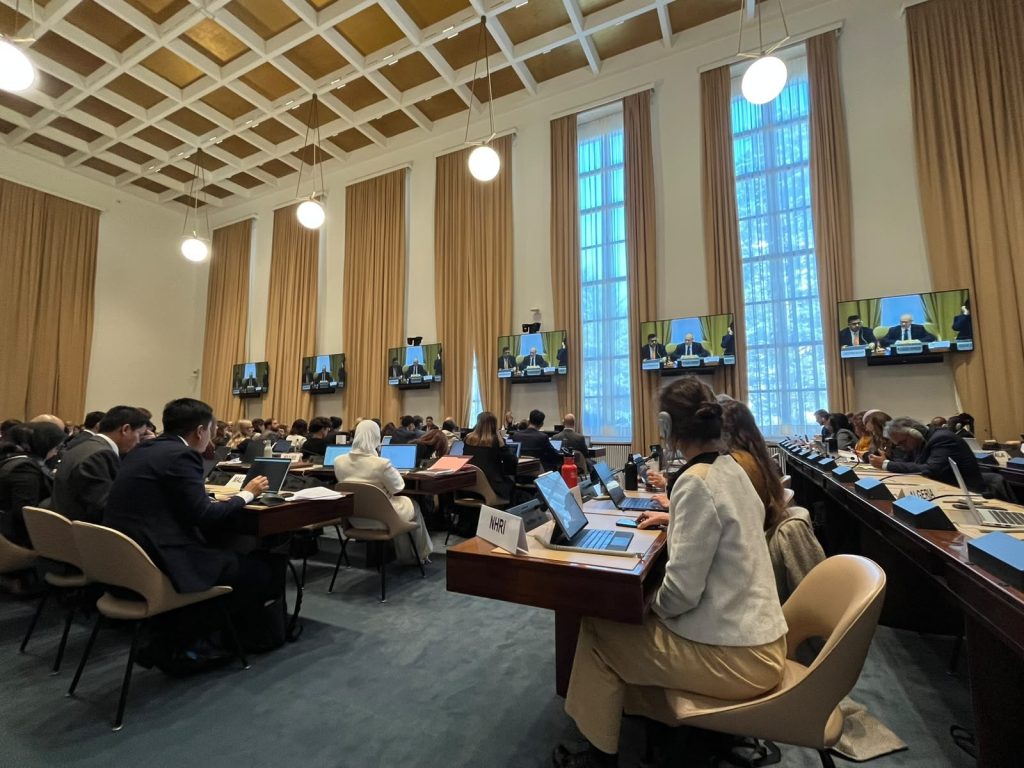
The session focused on Articles 1–3 and 12–24 of the draft instrument, covering definitions, purpose and scope, mutual legal assistance, international cooperation, consistency with international law, institutional arrangements and implementation.
The National Human Rights Institutions (NHRIs) of France, Germany and the Democratic Republic of the Congo took part in the session. The German Insitute for Human Rights delivered a statement on behalf of GANHRI. Speaking in its own capacity, France’s Commission nationale consultative des droits de l’Homme stressed the urgency of progress in the negotiations to ensure respect for human rights and the environment across value chains and called on the European Union to adopt a formal negotiating mandate.
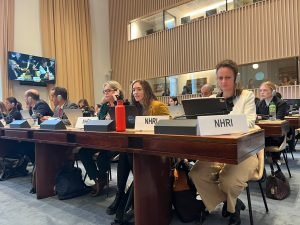 Strengthening access to effective remedy
In its statement, GANHRI welcomed the recognition of both judicial and non-judicial mechanisms for access to remedy under Article 7, as well as the call under Article 12 to allocate appropriate support and resources to relevant mechanisms.
These provisions are essential to ensure that people affected by business-related human rights abuses can obtain effective remedies, including in cases involving transnational business activities.
Building on the recommendations outlined in its position paper published for the 11th session, GANHRI reiterated its call for the future instrument to explicit recognise NHRIs compliant with the Paris Principles as independent monitoring mechanisms.
NHRIs are well placed to monitor the human rights impacts of cross-border business activities along supply and value chains. They can also handle complaints involving transnational business activities and facilitate access to effective remedies.GANHRI called on States to engage with NHRIs throughout the negotiation process and to draw on their expertise.
The Chair-Rapporteur recommended that an updated draft of the instrument be prepared, preferably by the end of February 2027. The draft will take into account proposals and comments from States and other stakeholders, including at discussions during the 11th and 12th sessions. Further intersessional consultations are planned for next year, ahead of the 13th session of the OEIGWG in October 2027, where States are expected to continue direct negotiations on the basis of the updated draft.
Through its Working Group on Business and Human Rights, GANHRI will continue to contribute to the process and to advocate for an instrument that strengthens human rights protection, accountability and access to remedy.
Ahead of the UN Climate Change Conference (COP31), GANHRI today published an open letter calling on States to put human rights at the heart of their climate decisions.

GANHRI, the Regional Networks, and member NHRIs took part in the second session of the Intergovernmental Working Group (IGWG) on the Human Rights of Older Persons , held in Geneva from 26 to 30 October 2026. The session marked the start of discussions on the substance of a future legally binding instrument.
The UN Human Rights Council has adopted by consensus resolution A/HRC/63/25 on NHRIs, a strong reaffirmation of support for independent and effective NHRIs and their role in promoting and protecting human rights, online and offline

Launched at a side event during HRC63, a new UNESCO-GANHRI brief offers NHRIs practical guidance on using existing tools to monitor and assess national digital environment and address related human rights risks.