GANHRI calls on States to put human rights at the centre of COP31
Ahead of the UN Climate Change Conference (COP31), GANHRI today published an open letter calling on States to put human rights at the heart of their climate decisions.


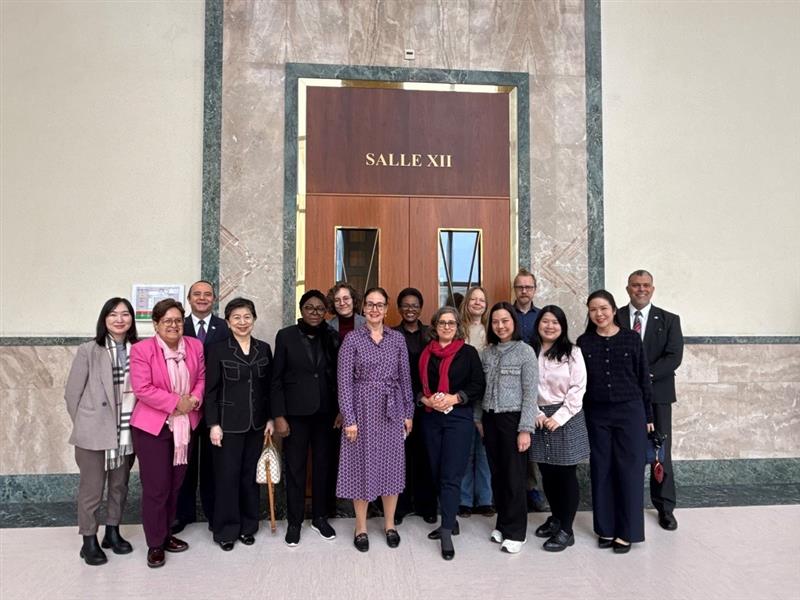
GANHRI, the Regional Networks and member National Human Rights Institutions (NHRIs) took part in the second session of the Intergovernmental Working Group (IGWG) on the Human Rights of Older Persons , held in Geneva from 26 to 30 October 2026. The session marked the start of discussions on the substance of a future legally binding instrument (LBI). At its first session in July 2026, the IGWG discussed its mandate and a proposed timeline for developing the instrument.
Chaired by Argentina, this second session focused on the content and structure of the future instrument across five thematic areas: the preamble, definitions, principles and States obligations, the catalogue of rights, and implementation and monitoring mechanisms. Facilitators were also appointed to take forward work on each area.
“It is wonderful to see the growing engagement of NHRIs from one session to the next, as well as their increasing interest in the rights of older persons,” said Claudia Mahler, member of the German Institute for Human Rights and former Independent Expert on the enjoyment of human rights by older persons. “We are now entering the phase of concrete drafting elements of a convention, a process that requires national consultations and effective coordination. As experts in the protection of human rights, NHRIs have a key role to play in incorporating established language from other processes and conventions. This is our opportunity to help shape a convention on the rights of older persons,” she added.
States showed broad agreement on several key principles, including diversity and intersectionality, a human right-based and life-course approach to ageing, and the meaningful participation of older persons.
GANHRI renewed its call for a strong instrument that addresses ageism, sets out clear State obligations and effective accountability mechanisms, and ensures that NHRIs take part in a structured and meaningful way throughout drafting and implementation. GANHRI and its Working Group on Ageing and the Human Rights of Older Persons also used the session to build closer contact with the facilitators and with the IGWG Core Group.
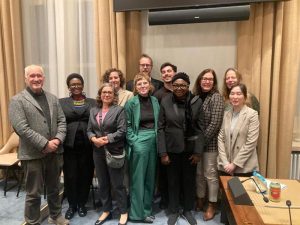
NHRIs also met with Alexandre da Silva, Brazil’s National Secretary for the Rights of Older Persons, and Lucas Vilela, General Coordinator for International Affairs at the Ministry of Human Rights and Citizenship. Ahead of Brazil’s chairmanship of the IGWG, they discussed how NHRIs’ independent expertise and engagement with older persons at national level can support the development of the future instrument.
NHRIs from Australia, Cameroon, Finland, Georgia, Germany, Greece, Guatemala, Nigeria, the Philippines, Poland, Qatar, South Africa, Thailand, Uganda, and the United Kingdom took the floor, speaking on ageism, accountability, participation, emerging challenges, and gaps in protection. NHRIs from Colombia, Malawi, Namibia, Palestine, the Republic of Korea, Slovenia, Sri Lanka and Sweden also endorsed joint NHRI statements remotely.
The European Network of National Human Rights Institutions (ENNHRI) called for a human rights-based approach to ageing and for recognition of the intersecting forms of discriminations older persons face. The Network of NHRIs of the Americas (Red de Instituciones Nacionales de Derechos Humanos del Continente Americano, RINDHCA) stressed the need to guarantee a right to care that respects personal autonomy.
“Being here in Geneva for the second session has shown how important it is for NHRIs to take part directly in the negotiations. Speaking for RINDHCA, we brought a clear message: protecting older persons is a matter of justice and human rights. We bring first-hand knowledge of the challenges older persons face, helping ensure that their lived realities inform the future international instrument,” said José Alejandro Córdova, Human Rights Ombdusman of Guatemala’s Procuraduría de los Derechos Humanos.
As independent institutions working at national level, NHRIs can link international standards to what happens on the ground. GANHRI continues to call for NHRIs to be recognised as a distinct stakeholder in the process, alongside States and civil society.
Collaboration between NHRIs, equality bodies, academia and civil society is equally important. Prior to the session, the German Institute for Human Rights presented the role of NHRIs at an NGO preparatory meeting organised by the Global Alliance for the Rights of Older People (GAROP) and the NGO Committee on Ageing Geneva.
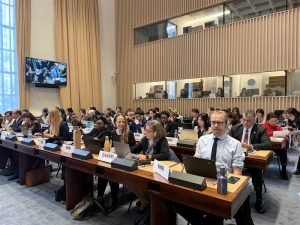
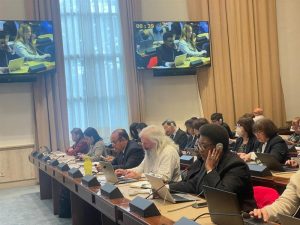
At the closing meeting, Brazil’s Permanent Representative was appointed Chair of the IGWG for 2027, succeeding Argentina. Five pairs of co-facilitators were also appointed to convene hybrid consultations on the five thematic areas of the future instrument: the Philippines and Serbia, Slovenia and Uruguay, the Gambia and Qatar, Australia and Brazil, and Malta and Lesotho.
NHRIs continued to call for an inclusive drafting process at the closing session. Commissioner Nomahlubi Khwinana of the South African Human Rights Commission proposed a stakeholder engagement committee to inform negotiations, bringing together NHRIs, older persons and their representative organisations, and civil society.
Under the timeline proposed , which is due to be confirmed by the Core Group, a call for inputs on the five thematic areas will be issued in November 2026, followed by intersessional consultations from December 2026 to April 2027. The third session of the IGWG is expected from 19 to 21 of July 2027, with a zero draft to be finalized by October 2027.
GANHRI thanks Argentina for guiding the initial stages of the process and welcomes Brazil’s incoming chairmanship of the IGWG GANHRI and its Working Group on Ageing and the Human Rights of Older Persons will continue to work with the Chair and co-facilitators, guided by GANHRI’s strategy on the IGWG, so that NHRIs contribute meaningfully to the development of the future instrument.
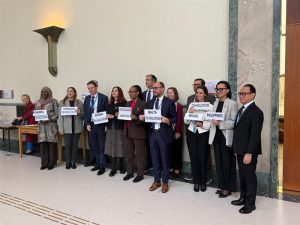
Ahead of the UN Climate Change Conference (COP31), GANHRI today published an open letter calling on States to put human rights at the heart of their climate decisions.
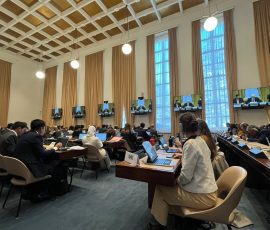
From 12 to 16 October 2026, GANHRI took part in the 12th session of the Open-ended Intergovernmental Working Group on Transnational Corporations and Other Business Enterprises with respect to Human Rights (OEIGWG) in Geneva, which continued negotiations on a legally binding instrument (LBI) on business and human rights.
The UN Human Rights Council has adopted by consensus resolution A/HRC/63/25 on NHRIs, a strong reaffirmation of support for independent and effective NHRIs and their role in promoting and protecting human rights, online and offline

Launched at a side event during HRC63, a new UNESCO-GANHRI brief offers NHRIs practical guidance on using existing tools to monitor and assess national digital environment and address related human rights risks.