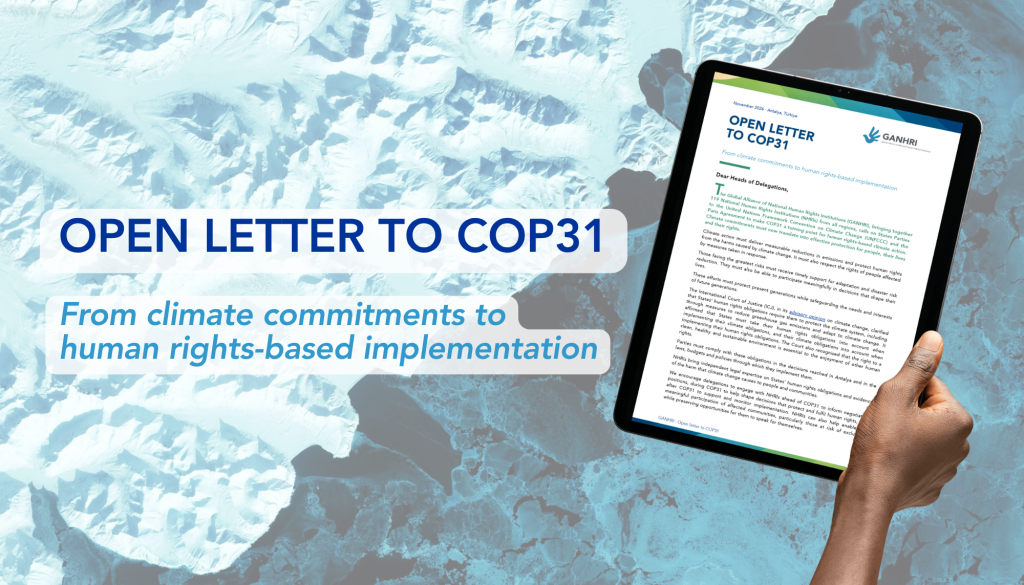
COP31 takes place from 9 to 20 November in Antalya, Türkiye, under the theme “Driving Implementation Through Cooperation and Collective Action.” The letter sets out the human rights principles that should guide States’ decisions at the conference and beyond.
“COP31 must build on the outcomes of Belém and translate climate commitments into concrete action that protects people and their rights. Human rights must guide climate finance, adaptation and a just transition, with particular attention to the most affected communities. As independent institutions, NHRIs play a vital role in monitoring progress, advising States and promoting accountability. The success of COP31 must be measured by its impact on people’s lives.” GANHRI Chairperson, Amina Bouayach.
Key recommendations
GANHRI calls on States to implement their adaptation and mitigation commitments through rights-based laws and policies, and to set targets that are regularly updated and publicly reported. The letter recalls the International Court of Justice’s advisory opinion, which recognised States’ obligation to take human rights into account in environmental decisions.
The letter also asks States to ensure that climate finance reaches the people and communities who need it, and that groups in vulnerable situations are included in responses to loss and damage.
Finally, GANHRI stresses the need to protect participation, civic space and independent scrutiny. NHRIs have independent expertise on human rights obligations and on the harms communities already face. States should enable them to contribute evidence, monitor implementation and issue recommendations.
“Our priorities for COP31 are clear: stronger climate targets backed by laws and budgets, finance that reaches communities, adaptation plans that reflect real lives, and a just transition away from fossil fuels. All of this depends on people being able to take part in decisions and speak out safely.” GANHRI Secretary, Alyson Kilpatrick.
GANHRI at COP31
As negotiations address emissions reductions, adaptation, climate finance and a just transition, GANHRI will advocate for rights-based climate action that strengthens accountability, ensures meaningful participation by affected communities and recognises the role of NHRIs in advancing climate justice.
On 10 November, GANHRI and the Raoul Wallenberg Institute (RWI) will host a side event, “Advancing rights-based climate action and climate justice: the unique role of NHRIs,” in side event room 2 (DALYAN), Blue Zone. Moderated by Peter Dawson of the Norwegian Human Rights Institution, the event will bring together GANHRI Chairperson Amina Bouayach, UN Special Rapporteur on Environmental Defenders under the Aarhus Convention Michel Forst, and RWI researcher Claudia Ituarte-Lima (online), alongside NHRI representatives and regional partners. Speakers will discuss how NHRIs use legislative and policy developments to strengthen national climate governance, including through monitoring, recommendations to governments and engagement with affected communities and environmental human rights defenders.
The NHRIs of El Salvador, Greece, Morocco, Norway, the Philippines, the Republic of Korea, Thailand and Türkiye, as well as the Network of African National Human Rights Institutions, will attend COP31.
From Antalya to Amman
Climate change and human rights have been a thematic priority for GANHRI for several years. Throughout 2026, GANHRI has been consulting NHRIs across all regions, together with the UN Special Rapporteur on Climate Change, on their work to advance human rights-based climate legislation in order to develop specific guidelines for them. Through the Tripartite Partnership with UNDP and OHCHR, GANHRI has also published a tool for NHRIs to monitor the right to a healthy environment.
In December, GANHRI will hold its 15th International Conference, “Climate Change, its Impact on Human Rights, and the Role of NHRIs,” in Amman, Jordan, co-hosted with Jordan’s National Centre for Human Rights, Morocco’s Conseil national des droits de l’Homme, and OHCHR. The Conference will look at how international climate commitments can be put into practice at national level. Sessions will cover climate justice, human mobility, environmental human rights defenders, and business accountability. It will close with an Outcome Declaration setting out shared priorities for NHRI action.
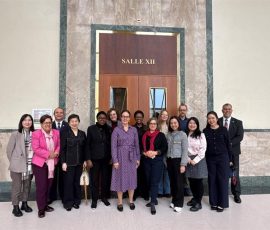
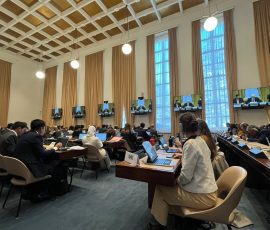
GANHRI, the Regional Networks, and member NHRIs took part in the second session of the Intergovernmental Working Group (IGWG) on the Human Rights of Older Persons , held in Geneva from 26 to 30 October 2026. The session marked the start of discussions on the substance of a future legally binding instrument.
From 12 to 16 October 2026, GANHRI took part in the 12th session of the Open-ended Intergovernmental Working Group on Transnational Corporations and Other Business Enterprises with respect to Human Rights (OEIGWG) in Geneva, which continued negotiations on a legally binding instrument (LBI) on business and human rights.
The UN Human Rights Council has adopted by consensus resolution A/HRC/63/25 on NHRIs, a strong reaffirmation of support for independent and effective NHRIs and their role in promoting and protecting human rights, online and offline
Launched at a side event during HRC63, a new UNESCO-GANHRI brief offers NHRIs practical guidance on using existing tools to monitor and assess national digital environment and address related human rights risks.
We use cookies to ensure that we give you the best experience on our website. By clicking on "Accept All" you consent to the use of cookies.